
Seamlessly
integrate
with your current PMS and CRM

Ask most multifamily operators what's driving NOI pressure in their portfolio right now, and you'll hear the same answers: occupancy softness, rising expenses, renewal friction, market competition.
Collections rarely makes the list and that's part of the NOI problem.
Delinquency doesn't announce itself. It accumulates quietly, through follow-up gaps, inconsistent outreach, and onsite teams too stretched to execute with precision. By the time it shows up in your NOI, you're already behind.
This post breaks down why collections is one of the most under leveraged levers in multifamily operations and what high-performing operators are doing differently.
The past few years have seen operators work hard to drive occupancy. And across many markets, it's worked. Vacancy rates have tightened, leasing teams have hit their numbers, and portfolios have looked healthy on the top line.
But NOI tells a different story.
Expenses have increased steadily: payroll, maintenance, insurance, utilities. Concessions are still being used to attract and retain residents in competitive markets. And underneath it all, collections inconsistency is quietly compressing margins in ways that don't always surface in weekly reporting.
The uncomfortable reality is that occupancy and NOI are not the same number. A 95% occupied portfolio with a 4% delinquency rate is not performing the way it looks on paper. Revenue you can't collect isn't revenue.
Collections are central to NOI protection. It always has been. )perators are only now starting to treat it that way.
Let's make the math concrete.
For example, take a portfolio running 8,000 units at an average monthly rent of $1,650. If delinquency creeps from 3% to 5%, a two-point shift that can happen gradually and without triggering alarms…
Yet, that is over $3 million in delayed or lost revenue annually.
That number doesn't arrive all at once. It builds slowly, compounding through:
The financial impact of collections inconsistency is real and measurable. The challenge is that most operators don't calculate it until it's already eroded margin. A two-point increase in delinquency across an 8,000-unit portfolio costs over $3M annually. Most operators don't see it coming.
Collections underperformance is rarely the result of bad intentions. It's the result of operational overload. Onsite teams are asked to do a lot.
They're managing tours, processing applications, handling renewals, responding to maintenance requests, and building resident relationships all while also tracking down delinquent payments and sending legally compliant notices.
In that context, collections follow-up becomes reactive rather than structured. Teams reach out when they have time, not on a cadence that maximizes recovery. Notices go out inconsistently. Residents who might have paid with a timely nudge slip further into arrears because the follow-up was delayed or never happened.
At the portfolio level, this creates a visibility problem. Regional managers and VPs of Operations often don't have a clear picture of delinquency status across properties in real time. They're relying on reports that are already a few days old, or on property managers to self-report… which means problems surface later than they should.
The result is a collections function that's technically happening everywhere but is executed inconsistently, inefficiently, and at a cost to both onsite morale and portfolio NOI.
The operators who manage collections most effectively share a few common traits and none of them are about working harder or hiring more people.
They run on a structured cadence. Follow-up happens on a defined schedule from the first day rent is late through the notice and escalation process. There's no ambiguity about when outreach happens, what it says, or what comes next.
They maintain compliance consistently. Every touchpoint is documented, every notice goes out on time, and there's a clear audit trail if escalation becomes necessary. This isn't just good practice, it's legal protection.
They give leadership visibility. Portfolio-level delinquency reporting is real-time, not weekly. Regional leaders can see which properties are performing and which are slipping before it becomes a reporting period problem.
They protect onsite bandwidth. Collections execution is structured enough that onsite teams aren't spending mental energy deciding what to do next. The process runs, they execute it, and they can stay focused on leasing and resident experience.
This kind of standardization doesn't require a larger team. It requires a better-designed process and increasingly, the infrastructure to automate it at scale.
For a long time, multifamily operators approached collections technology the way they approached most back-office improvements: cautiously, incrementally, and usually after something had already gone wrong.
That's changing.
AI-powered collections workflows are now being used by operators across the country to do what manual processes can't: execute consistently at scale, across every property, without adding headcount.
The specific capabilities that drive NOI impact are straightforward. Automated follow-up ensures that every delinquent resident receives outreach on schedule, not when someone has time, but when the cadence calls for it.
Compliance guardrails mean that notices are sent correctly and documented regardless of which property or team is executing. Portfolio-level dashboards give operations leadership the visibility to catch problems early and intervene before they compound.
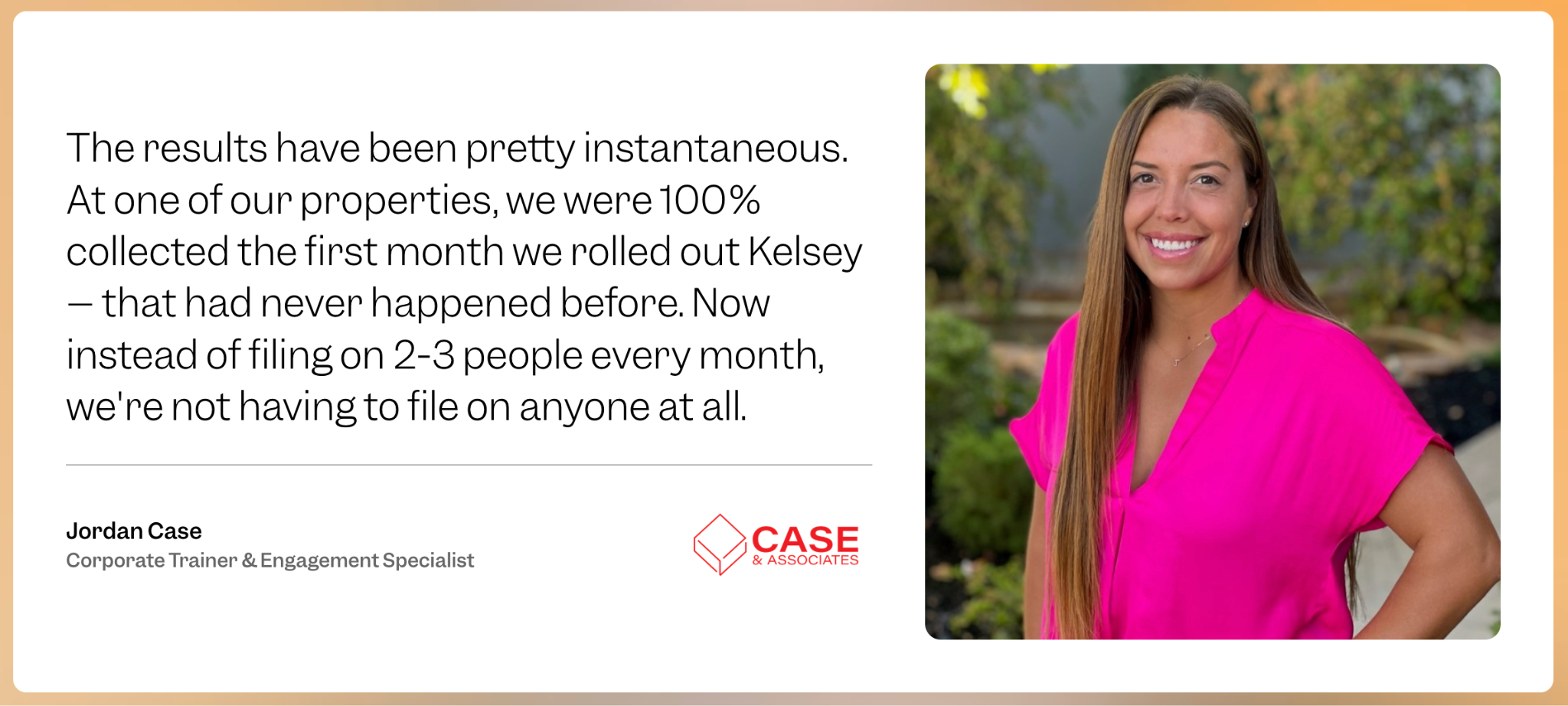
This isn't about replacing your onsite teams or centralizing decisions that should stay local. It's about giving your teams infrastructure that makes them more effective and giving leadership the visibility to manage NOI proactively instead of reactively.
The operators seeing the best results aren't using automation to cut costs. They're using it to protect revenue they were already entitled to.
Multifamily has spent years optimizing the front end of the resident lifecycle — lead generation, touring, application, leasing. The technology investment, the process design, the management attention has all flowed toward acquisition.
Collections sits at the other end of that lifecycle, and it's been underinvested in for too long.
Ready to protect your NOI?
See how Zuma helps multifamily operators standardize collections, reduce onsite burden, and improve recovery consistency all without adding headcount.
Check out Collections AI by Zuma.
with your current PMS and CRM